Retatrutide Dosage Guide for Research Use
RESEARCH REFERENCE · UPDATED 2026
This guide summarizes how retatrutide dosing is typically structured in published research and lab protocols. It is written for laboratory research purposes only — retatrutide is not FDA-approved and none of this is medical or dosing advice for human use.
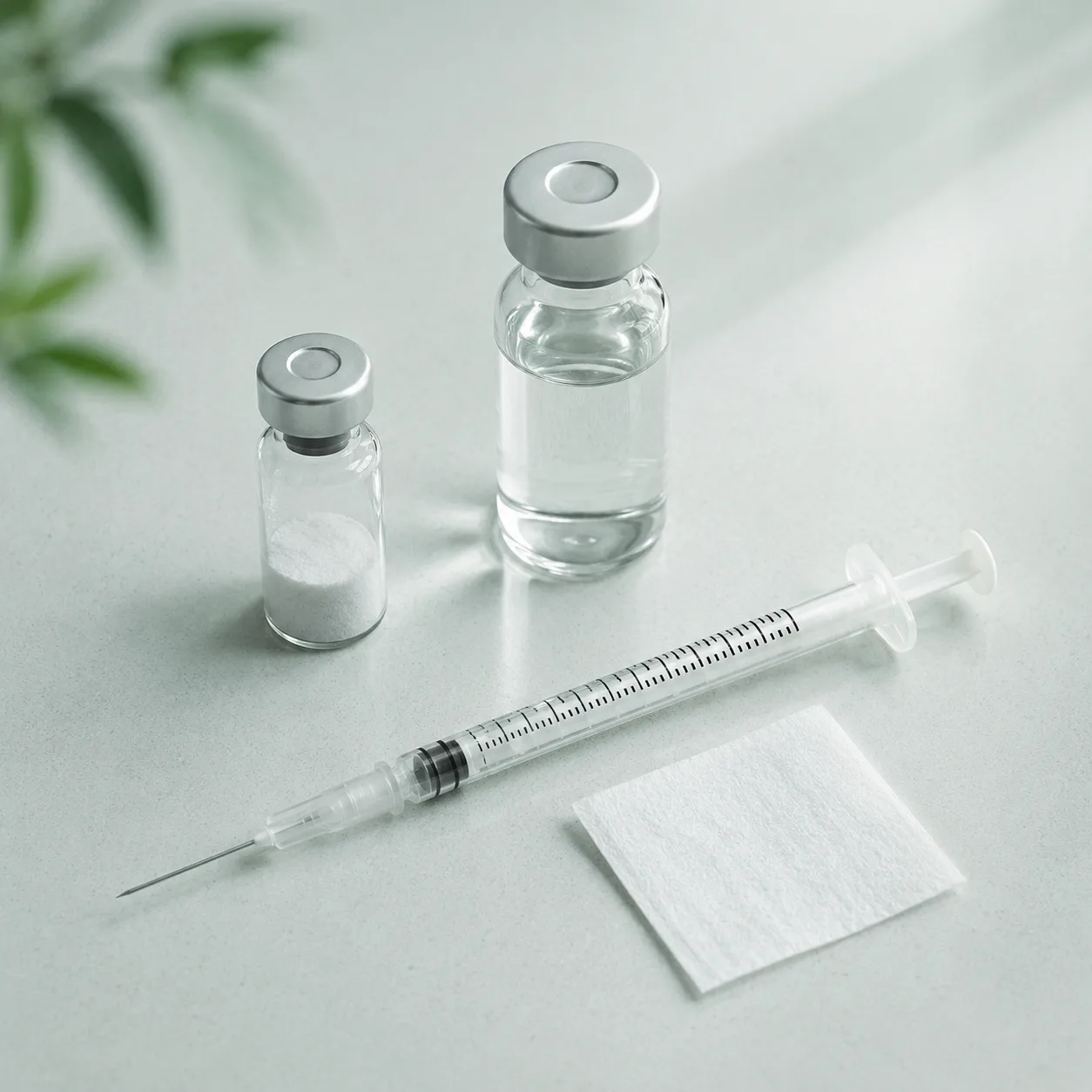
Table of Contents
- Why dosage searches for retatrutide are so common
- What published trial dosing protocols actually show
- How reconstitution is typically handled in lab settings
- Concentration and measurement in research protocols
- Batch consistency matters more than the number on the label
- Storage between uses
- FAQ
- Where this guide stops
Why dosage searches for retatrutide are so common
Retatrutide is being studied in clinical trials at specific, controlled dose levels, and a lot of that trial data is publicly discussed. That’s led to a huge amount of search interest in “retatrutide dosage” from people trying to understand the compound — but there’s an important distinction between clinical trial protocols run under medical supervision and anything relevant to unsupervised use, which we’re not going to describe here.
What published trial dosing protocols actually show
The Phase 2 trial data published in the New England Journal of Medicine (Jastreboff et al., 2023) used a subcutaneous, once-weekly dose-escalation design across several dose arms. Doses studied ranged up to 12mg weekly, reached gradually through a stepped titration schedule rather than starting at the target dose — a pattern common to this drug class, intended to reduce early gastrointestinal side effects (see our side effects article for more on that pattern). Later Phase 3 protocols have continued to use structured, supervised titration rather than a flat weekly number. That once-weekly interval traces back to the compound’s pharmacokinetic profile — see our half-life breakdown for the elimination data behind it.
What this means for research purposes: any credible reference to “retatrutide dosage” should point back to a specific trial’s published protocol and titration schedule — not a single flat number, since the trials themselves don’t use one. If you’re citing dosage in a research context, cite the specific trial phase and arm.
How reconstitution is typically handled in lab settings
Retatrutide is supplied as a lyophilized (freeze-dried) powder and is reconstituted with bacteriostatic water before use in a research setting. Standard peptide reconstitution practice, as followed in laboratory protocols generally, includes:
- Allowing the vial to reach room temperature before adding diluent
- Injecting bacteriostatic water slowly, down the side of the vial rather than directly onto the powder
- Gently swirling — never shaking — to avoid degrading the peptide structure
- Storing the reconstituted solution refrigerated and using it within the timeframe indicated by the supplier’s guidance
We cover the exact bac-water-per-vial-size math step by step in our full reconstitution guide.
Concentration and measurement in research protocols
Because retatrutide trial dosing spans a wide range depending on the study phase and objective, researchers typically calculate concentration (mg/mL) based on the specific vial size and diluent volume used in their protocol, then use a calibrated syringe appropriate for that concentration. Precision here is a data-integrity issue as much as anything else — inconsistent measurement is one of the most common sources of unreliable results in peptide research.
Batch consistency matters more than the number on the label
A dosage figure is only meaningful if the actual peptide content of the vial matches what the label claims. This is why a batch-specific, independently verified Certificate of Analysis matters as much as the dosing protocol itself — see our buyer’s guide for what to check before sourcing a batch, and our COA library for current lab results. For a breakdown of what actually drives retatrutide pricing and how to compare vendors on a true per-mg basis, see our price & cost guide.
Storage between uses
Both the unreconstituted lyophilized powder and the reconstituted solution have specific storage requirements that affect stability over time. We cover this in full in our storage and handling guide.
FAQ
Is there a standard retatrutide dosing schedule?
No single schedule applies universally — published trials use structured titration across several dose arms rather than one flat weekly figure. See the trial dosing section above for how that’s actually documented.
What’s the highest dose studied in retatrutide trials?
Published Phase 2 data studied doses up to 12mg weekly, reached through gradual titration rather than starting there. Later trial phases have continued to test within a similar range.
Why do trial protocols escalate the dose gradually instead of starting at the target?
Gradual titration is standard practice across this drug class specifically to reduce early gastrointestinal side effects, which cluster during the escalation phase far more than at a stable maintenance dose. See our side effects article for the data on this.
Is retatrutide dosage the same as tirzepatide dosage?
No — they’re different compounds with different trial protocols and dose ranges. See our full comparison for how the trial data differs between them.
Where this guide stops
We’re deliberately not publishing a specific mg-per-week dosing schedule for individual use here. Retatrutide dosing in clinical trials is administered under medical supervision at levels determined by trial protocols, and translating that into a generic recommendation for unsupervised use would be irresponsible and outside what we’re able to speak to. If you’re conducting laboratory research, follow your institution’s protocols and consult the primary trial literature directly.
Source a lab-verified batch with COA included
Related guides
- Where to buy retatrutide: complete buyer’s guide
- How to reconstitute retatrutide (bac water & mixing math)
- Storage and handling: do’s and don’ts
- Retatrutide side effects: what research shows
- Frequently asked questions
- Retatrutide vs. tirzepatide vs. semaglutide comparison
- Retatrutide price & cost guide
- Retatrutide half-life: what the research shows
This article is for research and informational purposes only and does not constitute medical or dosing advice. Retatrutide is not approved by the FDA for human use and is sold strictly for laboratory research by qualified individuals.